
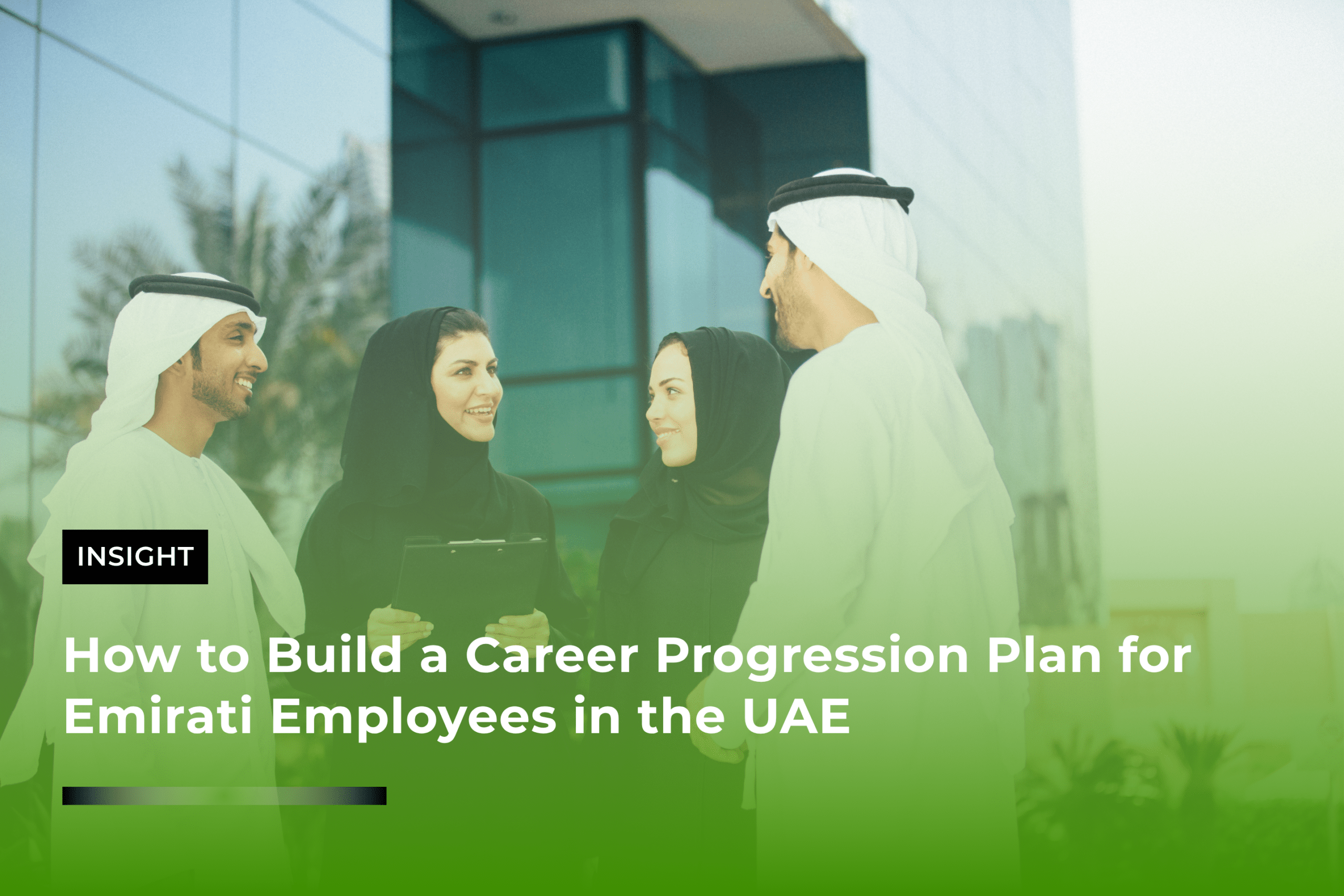
Hiring Emirati talent is only the beginning of a successful Emiratisation strategy. To build a sustainable and engaged workforce, businesses must also provide clear career progression opportunities that encourage long-term growth and employee retention.
In today’s competitive job market, Emirati professionals are looking for more than competitive salaries. They want employers who invest in their development, offer leadership opportunities, and provide a structured path for career advancement.
For employers, creating a career progression plan is not only beneficial for employee satisfaction—it also strengthens retention, supports succession planning, and contributes to long-term Emiratisation success.
This guide explains how businesses can build an effective career progression plan for Emirati employees in the UAE.
Why Career Progression Matters in Emiratisation
Emiratisation is designed to create meaningful and sustainable careers for UAE nationals, not simply increase hiring numbers.
A well-defined career progression plan helps businesses:
- Improve employee retention.
- Build future leaders.
- Increase employee engagement.
- Strengthen succession planning.
- Enhance workforce stability.
- Support long-term business growth.
Employees who can see a clear future within an organisation are more likely to remain committed and contribute to its success.
Benefits of Career Progression for Employers
Investing in employee development provides long-term advantages.
These include:
- Reduced employee turnover.
- Lower recruitment costs.
- Stronger leadership pipelines.
- Higher workforce productivity.
- Improved organisational knowledge.
- Better compliance readiness.
- Enhanced employer reputation.
Developing internal talent often proves more cost-effective than recruiting experienced professionals externally.
What Makes an Effective Career Progression Plan?
A successful career progression plan should provide employees with a clear understanding of how they can grow within the organisation.
Key elements include:
- Defined career pathways.
- Skills development.
- Performance expectations.
- Leadership opportunities.
- Continuous learning.
- Regular feedback.
- Internal promotion opportunities.
Career progression should be structured, transparent, and aligned with both employee aspirations and business objectives.
Step 1: Identify Career Pathways
Begin by mapping career opportunities across departments.
For example:
Entry-Level Roles
- Graduate Trainee
- Administrative Assistant
- HR Coordinator
- Customer Service Executive
- Finance Assistant
Mid-Level Roles
- Team Leader
- HR Specialist
- Financial Analyst
- Operations Supervisor
- Marketing Executive
Senior Roles
- Department Manager
- Operations Manager
- Finance Manager
- HR Manager
- Business Development Manager
Leadership Roles
- Head of Department
- Director
- General Manager
- Executive Leadership
Showing employees how they can progress creates motivation and long-term commitment.
Step 2: Define Skills and Competencies
Each stage of career progression should have clearly defined expectations.
Assess employees based on:
- Technical knowledge.
- Communication skills.
- Leadership ability.
- Problem-solving.
- Project management.
- Team collaboration.
- Decision-making.
- Digital skills.
Employees should understand which competencies they need to develop before progressing to the next level.
Step 3: Create Individual Development Plans
Every employee has different career aspirations.
Managers should work with Emirati employees to create personalised development plans that include:
- Short-term objectives.
- Long-term career goals.
- Required training.
- Leadership opportunities.
- Performance milestones.
- Mentorship support.
Individual development plans create accountability for both employees and employers.
Step 4: Invest in Continuous Learning
Professional development should be ongoing rather than limited to onboarding.
Businesses can support employee growth through:
- Internal training programmes.
- Professional certifications.
- Industry workshops.
- Online learning platforms.
- Cross-functional projects.
- Technical skills development.
Continuous learning helps employees remain competitive while preparing them for greater responsibilities.
Step 5: Establish Mentorship Programmes
Mentorship plays an important role in employee development.
Experienced managers can provide guidance on:
- Career planning.
- Leadership development.
- Workplace challenges.
- Professional communication.
- Business decision-making.
Mentorship also strengthens organisational culture and employee engagement.
Step 6: Offer Leadership Development Opportunities
Future leadership should be developed long before management positions become available.
Leadership programmes may include:
- Team management training.
- Strategic planning workshops.
- Public speaking.
- Project leadership.
- Decision-making exercises.
- Executive coaching.
Preparing employees early strengthens succession planning and organisational resilience.
Step 7: Conduct Regular Performance Reviews
Career progression should be supported by regular performance discussions.
Performance reviews should evaluate:
- Achievement of objectives.
- Skills development.
- Leadership potential.
- Areas for improvement.
- Career aspirations.
- Future learning opportunities.
Constructive feedback helps employees understand how they can continue progressing.
Step 8: Promote Internal Mobility
Businesses should encourage employees to explore opportunities across departments.
Internal mobility:
- Broadens experience.
- Develops new skills.
- Increases engagement.
- Supports succession planning.
- Creates future leaders.
Employees with cross-functional experience often become stronger managers.
Common Mistakes to Avoid
Focusing Only on Recruitment
Hiring without investing in employee development often results in higher turnover.
Providing No Clear Career Path
Employees are less likely to remain with organisations if they cannot see future opportunities.
Inconsistent Development Opportunities
Career development programmes should be available consistently across the organisation.
Delaying Leadership Development
Leadership skills should be developed early rather than only when management positions become available.
Industries Leading the Way in Career Development
Several sectors are investing heavily in Emirati employee development.
Banking and Financial Services
Banks continue offering graduate programmes, leadership academies, mentoring, and professional certifications.
Healthcare
Healthcare providers invest in operational leadership, administration, finance, and healthcare management development.
Technology
Technology companies emphasise digital skills, project leadership, innovation, and technical certifications.
Hospitality
Hotels and tourism organisations provide structured management development and customer service leadership programmes.
Professional Services
Consultancies and corporate service providers invest in continuous learning, client management, and future leadership development.
The Long-Term Value of Career Progression
Companies that prioritise employee development often achieve:
- Higher retention rates.
- Stronger workforce stability.
- Reduced recruitment costs.
- Better succession planning.
- Increased employee engagement.
- Improved productivity.
- Sustainable Emiratisation outcomes.
Career progression transforms recruitment into long-term workforce development.
Preparing for the Future of Emiratisation
As Emiratisation continues to evolve, businesses will increasingly compete to attract and retain talented UAE nationals.
Future workforce strategies are expected to focus on:
- Leadership development.
- Skills enhancement.
- Graduate recruitment.
- Employee wellbeing.
- Internal mobility.
- Long-term workforce planning.
Organisations that invest in career progression today will be better positioned for future growth.
Conclusion
A successful Emiratisation strategy does not end with hiring—it begins there.
Businesses that provide structured career progression, continuous learning, leadership development, and meaningful growth opportunities are far more likely to retain Emirati talent and build strong future leaders.
By investing in employee development, organisations not only strengthen compliance but also create a resilient workforce capable of supporting long-term business success and contributing to the UAE’s vision of a skilled, competitive, and future-ready economy.