
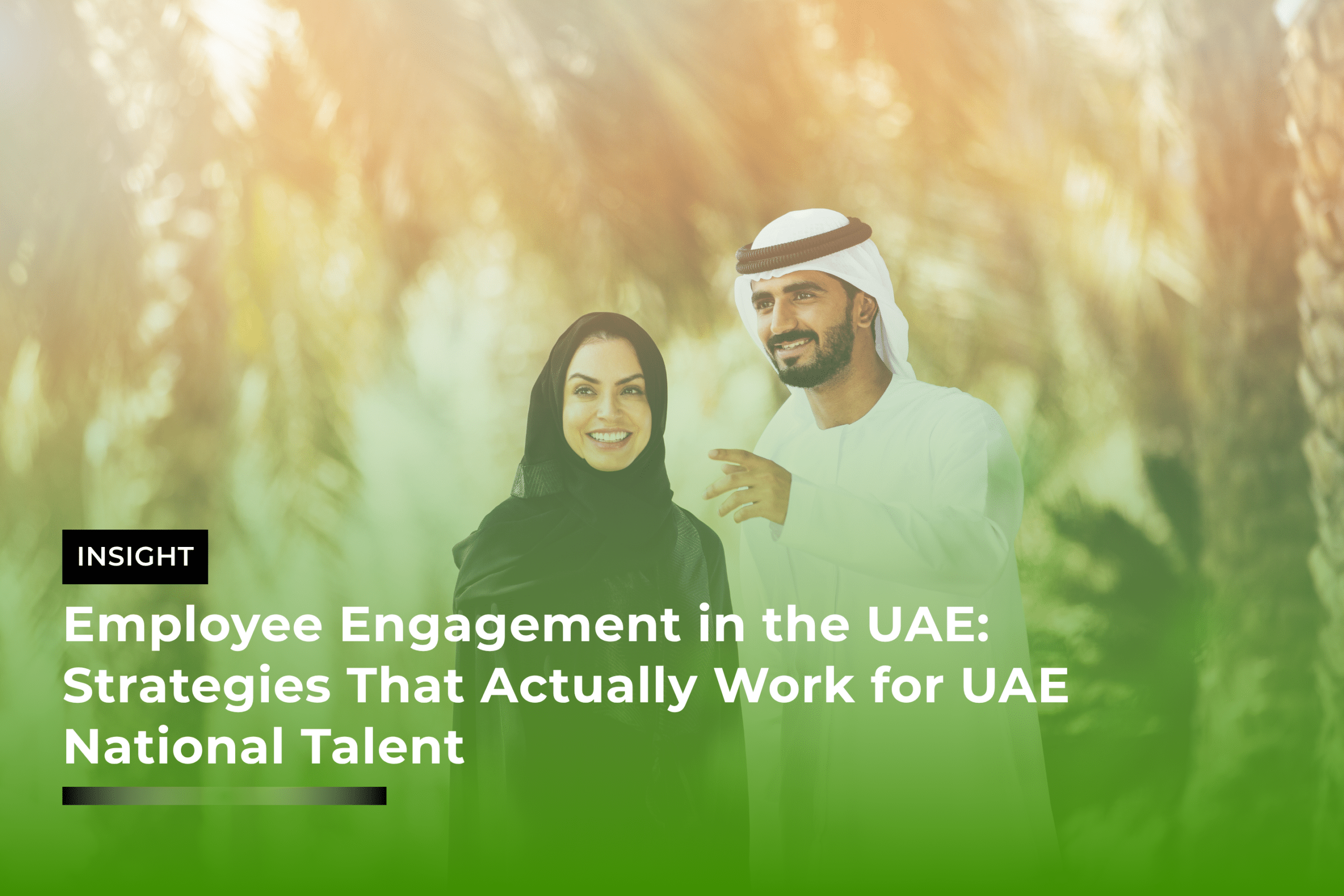
Hiring Emirati talent is only the first step toward building a successful Emiratisation strategy. The real challenge begins after onboarding—keeping employees engaged, motivated, and committed to long-term career growth within the organisation.
Many businesses focus heavily on recruitment but pay less attention to employee engagement. This often leads to higher turnover, increased recruitment costs, and repeated hiring cycles. In contrast, organisations that invest in meaningful engagement strategies are more likely to retain Emirati professionals, develop future leaders, and build a stable workforce.
In 2026, employee engagement is no longer simply an HR initiative. It has become a critical business strategy that supports Emiratisation workforce planning, and sustainable organisational growth.
Why Employee Engagement Matters for Emiratisation
Employee engagement refers to the level of commitment, motivation, and connection employees feel towards their work and their organisation.
For Emirati professionals, engagement goes beyond salary and benefits. It includes opportunities to learn, contribute, grow, and build a long-term career.
Strong engagement helps businesses:
- Improve employee retention.
- Increase productivity.
- Develop future leaders.
- Strengthen workforce stability.
- Reduce recruitment costs.
- Support long-term Emiratisation goals.
Organisations with engaged employees are generally better positioned to build sustainable and high-performing teams.
Why Some Engagement Strategies Fail
Many businesses introduce engagement initiatives that generate short-term enthusiasm but fail to create lasting impact.
Common reasons include:
- No clear career progression.
- Limited communication between employees and managers.
- Lack of recognition.
- Minimal learning opportunities.
- Generic engagement programmes that do not address employee needs.
- Focusing on benefits instead of professional growth.
Employee engagement should be integrated into the overall employee experience rather than treated as a standalone activity.
What UAE National Talent Values Most
Understanding employee expectations is the foundation of successful engagement.
Career Growth and Development
Many Emirati professionals prioritise employers that provide:
- Clear promotion pathways.
- Leadership opportunities.
- Professional certifications.
- Skills development.
- Continuous learning.
Employees who can see long-term career opportunities are more likely to remain with the organisation.
Meaningful Work
Employees want to understand how their role contributes to organisational success.
Providing meaningful responsibilities, ownership of projects, and opportunities to contribute to business outcomes increases motivation and job satisfaction.
Supportive Leadership
Managers play a significant role in employee engagement.
Employees value leaders who:
- Provide regular feedback.
- Encourage professional development.
- Listen to ideas.
- Support career aspirations.
- Recognise achievements.
Strong leadership builds trust and long-term commitment.
Positive Workplace Culture
An inclusive and collaborative work environment encourages employees to perform at their best.
Successful organisations promote:
- Respect.
- Teamwork.
- Open communication.
- Diversity.
- Employee wellbeing.
A healthy workplace culture strengthens employee loyalty.
Strategies That Actually Work
Create Clear Career Progression Plans
One of the most effective engagement strategies is providing employees with a clear understanding of how they can grow within the organisation.
Career progression plans should include:
- Defined career pathways.
- Skills required for promotion.
- Leadership development opportunities.
- Performance milestones.
- Individual development plans.
Employees are more engaged when they can see a future with the company.
Invest in Continuous Learning
Professional development is one of the strongest drivers of employee engagement.
Businesses should offer:
- Technical training.
- Leadership workshops.
- Professional certifications.
- Online learning.
- Cross-functional projects.
- Industry seminars.
Continuous learning demonstrates an employer’s commitment to employee success.
Establish Mentorship Programmes
Mentorship helps employees develop both professionally and personally.
Experienced mentors can provide:
- Career guidance.
- Leadership coaching.
- Workplace advice.
- Skills development.
- Performance feedback.
Mentorship strengthens employee confidence and improves long-term retention.
Recognise Employee Contributions
Recognition is one of the simplest yet most effective engagement strategies.
Businesses should celebrate:
- Outstanding performance.
- Project achievements.
- Work anniversaries.
- Professional certifications.
- Team contributions.
Regular recognition helps employees feel valued and appreciated.
Encourage Open Communication
Employees are more engaged when they feel their opinions matter.
Employers should:
- Hold regular one-to-one meetings.
- Conduct employee surveys.
- Encourage feedback.
- Share business updates.
- Discuss career goals.
Open communication builds trust and improves workplace relationships.
Promote Internal Mobility
Providing opportunities to move across departments allows employees to:
- Learn new skills.
- Gain broader business knowledge.
- Prepare for leadership roles.
- Increase engagement.
Internal mobility also supports succession planning and workforce development.
Prioritise Employee Wellbeing
Wellbeing has become an important factor in employee engagement.
Businesses can support employees through:
- Flexible working arrangements where appropriate.
- Wellness initiatives.
- Mental wellbeing support.
- Work-life balance.
- Employee assistance programmes.
Healthy employees are often more engaged and productive.
The Role of Managers in Employee Engagement
Managers have a direct influence on employee satisfaction and retention.
Successful managers:
- Set clear expectations.
- Provide constructive feedback.
- Support professional development.
- Encourage innovation.
- Recognise achievements.
- Build positive working relationships.
Leadership quality often determines whether employees stay or leave.
Industries Leading Employee Engagement in the UAE
Several industries are investing heavily in employee development and engagement.
Banking and Financial Services
Banks continue offering:
- Graduate programmes.
- Leadership academies.
- Mentorship.
- Professional certifications.
- Career progression pathways.
Healthcare
Healthcare providers invest in:
- Skills development.
- Leadership training.
- Employee wellbeing.
- Continuous professional education.
Technology
Technology companies focus on:
- Innovation.
- Learning opportunities.
- Flexible working models.
- Technical certifications.
- Career development.
Hospitality
Hospitality organisations engage employees through:
- Customer service excellence programmes.
- Management development.
- Recognition initiatives.
- Cross-department learning.
Professional Services
Consultancies and advisory firms prioritise:
- Continuous learning.
- Leadership development.
- Client exposure.
- Career progression.
- Performance coaching.
Measuring Employee Engagement
Businesses should regularly evaluate engagement through measurable indicators such as:
- Employee retention rates.
- Internal promotion rates.
- Employee satisfaction surveys.
- Training participation.
- Performance outcomes.
- Absenteeism.
- Exit interview feedback.
Regular measurement helps organisations identify opportunities for continuous improvement.
Long-Term Benefits of Employee Engagement
Companies that successfully engage Emirati employees often experience:
- Higher retention.
- Reduced recruitment costs.
- Stronger succession planning.
- Improved productivity.
- Better workforce stability.
- Enhanced employer reputation.
- Sustainable Emiratisation outcomes.
Engaged employees are more likely to become future leaders within the organisation.
Preparing for the Future
As Emiratisation continues to evolve, employee engagement will become increasingly important for attracting and retaining skilled Emirati professionals.
Businesses should continue investing in:
- Career development.
- Leadership programmes.
- Employee wellbeing.
- Workplace culture.
- Continuous learning.
- Internal mobility.
Organisations that prioritise engagement today will be better positioned to build resilient, future-ready workforces.
Conclusion
Employee engagement is no longer a secondary HR initiative—it is a strategic business priority that directly influences the success of Emiratisation.
Organisations that create meaningful career opportunities, invest in continuous learning, recognise employee contributions, and foster a supportive workplace culture are far more likely to attract and retain talented Emirati professionals.
By making employee engagement a core part of workforce planning, businesses can strengthen retention, develop future leaders, and build sustainable organisations that contribute to the UAE’s long-term economic vision.