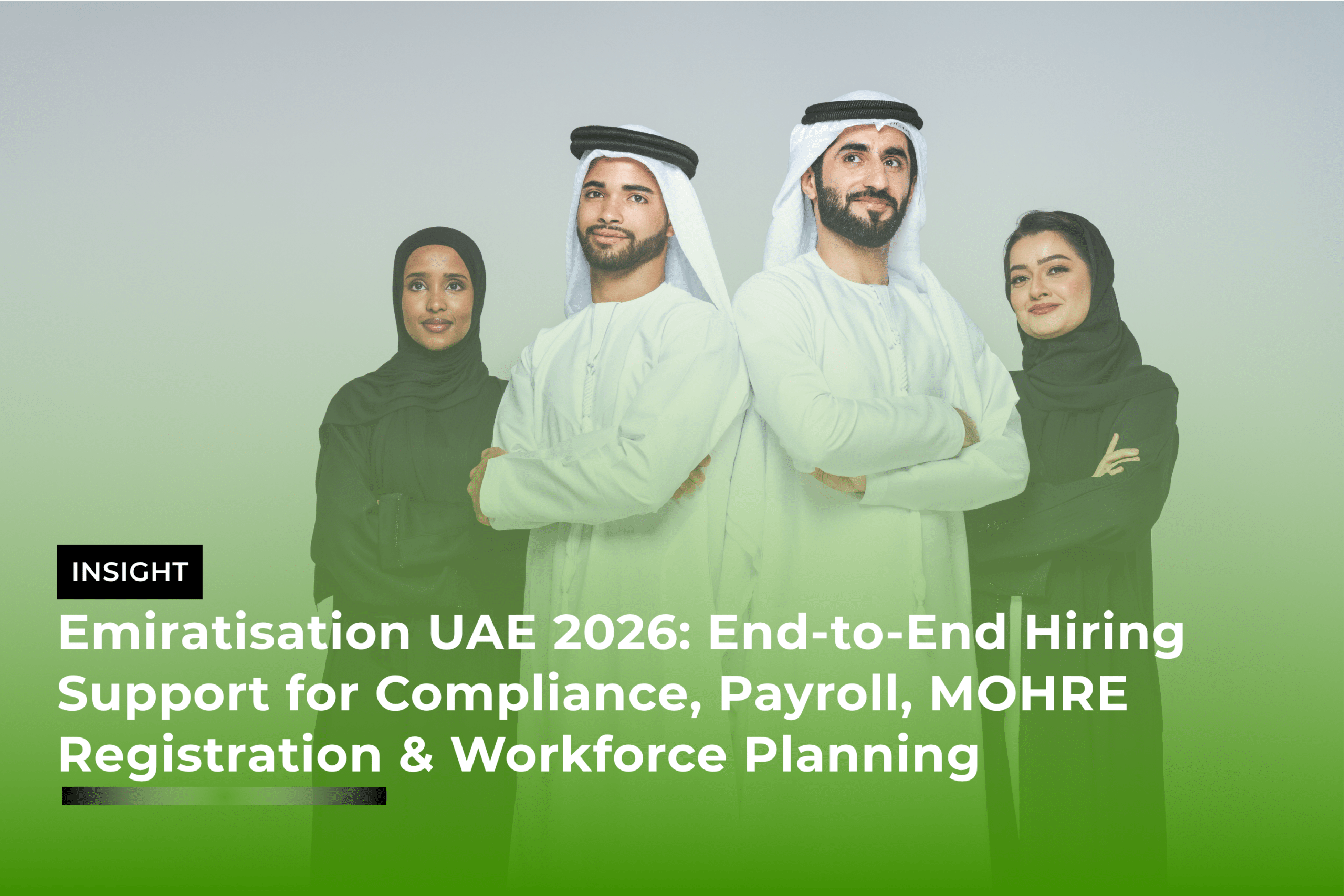
Emiratisation UAE 2026: End-to-End Hiring Support for Compliance, Payroll, MOHRE Registration & Workforce Planning
As the UAE continues accelerating private sector workforce nationalization initiatives, Emiratisation has become one of the most important priorities for businesses operating across the country in 2026. Companies are no longer focusing only on meeting hiring quotas — they are now looking for complete Emiratisation workforce solutions that support recruitment, compliance, payroll management, MOHRE registration, onboarding, and long-term workforce planning. With stricter enforcement, rising compliance expectations, and increasing competition for qualified Emirati professionals, businesses need a more structured and sustainable approach to Emiratisation. This is where end-to-end Emiratisation hiring support becomes essential. Understanding Emiratisation in the UAE Emiratisation is a UAE government initiative aimed at increasing the participation of UAE nationals in the private sector workforce. The program supports the UAE’s long-term economic development strategy by: Private sector companies meeting specific workforce thresholds are now required to comply with Emiratisation targets set by the Ministry of Human Resources and Emiratisation (MOHRE). Why Businesses Are Struggling With Emiratisation in 2026 Although many companies understand the importance of compliance, implementation remains a major challenge. Common business concerns include: Many organizations lack the internal resources or specialized HR expertise required to manage the full Emiratisation process effectively. The Growing Need for End-to-End Emiratisation Support Modern Emiratisation requires much more than recruitment alone. Businesses now require integrated workforce support solutions that cover: This complete approach helps companies reduce risk, improve efficiency, and maintain long-term compliance. Emirati Talent Sourcing and Recruitment Finding qualified Emirati professionals remains one of the biggest challenges for UAE employers. Competition for skilled Emirati candidates has increased significantly across industries such as: Specialized Emiratisation hiring support helps businesses: Companies that begin recruitment early generally achieve better hiring outcomes and stronger workforce integration. MOHRE Registration and Compliance Support One of the most important aspects of Emiratisation is ensuring full compliance with MOHRE regulations. Businesses must manage multiple processes, including: Errors or delays in these processes can result in: Professional Emiratisation support providers help businesses navigate these requirements more efficiently while reducing administrative burden. Payroll and HR Administration Payroll management plays a critical role in maintaining compliant Emirati employment structures. Businesses must ensure: As payroll regulations continue evolving in the UAE, many businesses are outsourcing payroll administration to improve accuracy, compliance, and operational efficiency. Integrated payroll support also helps companies maintain organized workforce documentation during government reviews and audits. Workforce Planning and Long-Term Strategy Forward-thinking organizations are now treating Emiratisation as a long-term workforce strategy rather than a short-term hiring obligation. Effective workforce planning includes: This approach creates stronger workforce stability while supporting sustainable business growth. Why Businesses Are Partnering With Emiratisation Workforce Specialists As regulations become stricter, many UAE businesses are choosing to work with specialized Emiratisation workforce solution providers. These partnerships help organizations: Outsourcing specific workforce functions also allows internal HR teams to focus more strategically on employee development and organizational growth. Industries Facing the Highest Emiratisation Pressure in 2026 Several sectors are currently experiencing increased monitoring and workforce nationalization requirements. These include: Companies operating in these industries are increasingly prioritizing structured Emiratisation planning to maintain operational continuity and compliance readiness. The Future of Emiratisation in the UAE The UAE government continues strengthening workforce nationalization efforts as part of broader economic transformation initiatives. Future developments may include: Businesses that establish strong Emiratisation systems today will be better prepared for future regulatory changes. Final Thoughts In 2026, Emiratisation is no longer simply a compliance requirement — it has become a critical business strategy for organizations operating in the UAE. Companies that invest in structured Emirati hiring, workforce planning, payroll compliance, and MOHRE coordination will be in a much stronger position to achieve sustainable growth while avoiding regulatory risk. End-to-end Emiratisation support allows businesses to simplify complex workforce processes, improve hiring efficiency, and build stronger long-term operational stability. As competition for Emirati talent continues to increase, proactive workforce planning and professional Emiratisation support will become essential for future-ready UAE businesses.