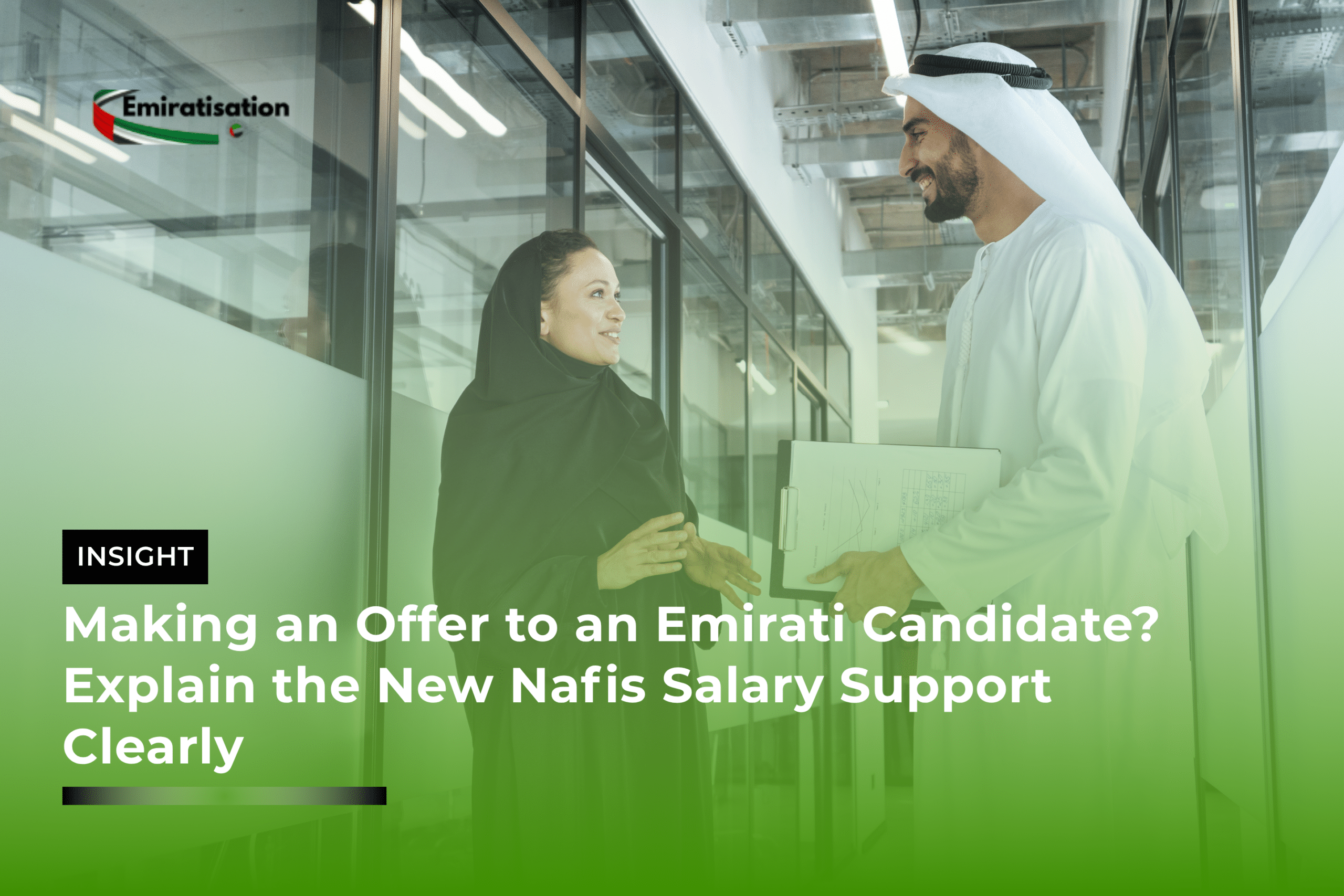


A vacancy opens. HR starts searching. An Emirati candidate is hired. Recruitment stops.
Then another vacancy appears—or an existing UAE national employee resigns—and the entire process starts again.
This one-hire-at-a-time approach may work when recruitment requirements are limited, but it can become increasingly difficult as Emiratisation becomes a permanent part of workforce planning.
An alternative is to build a UAE National talent pipeline: an ongoing pool of potential Emirati candidates who have already been identified, engaged, or assessed for future opportunities.
So which approach works better?
For most employers with recurring Emirati hiring requirements, building a sustainable talent pipeline provides greater long-term value. However, understanding the difference between the two approaches is essential before changing your recruitment strategy.
What Does Hiring One Emirati at a Time Mean?
The traditional recruitment model is vacancy-driven.
The process generally looks like this:
- A position becomes available.
- HR creates a job description.
- The vacancy is advertised.
- Applications are collected.
- Candidates are screened.
- Interviews are conducted.
- An offer is made.
- Recruitment stops once the position is filled.
There is nothing inherently wrong with this approach.
The problem arises when businesses repeatedly depend on it for positions where Emirati talent is already highly competitive.
Why Reactive Emirati Hiring Can Become a Problem
Recruitment Starts Too Late
If candidate sourcing begins only when a vacancy becomes urgent, employers immediately face time pressure.
The organisation may need someone within weeks, while identifying, interviewing, negotiating with, and onboarding the right candidate can take considerably longer.
Candidate Choice Becomes Limited
When recruitment is urgent, businesses can choose only from candidates available at that particular moment.
The strongest candidate for your organisation may not currently be looking for a job.
Competition Increases Near Hiring Deadlines
If many employers are recruiting Emirati professionals during similar periods, competition for suitable candidates can intensify.
Companies may then face:
- Fewer available candidates.
- Faster competing offers.
- Salary pressure.
- Longer recruitment timelines.
- Greater pressure on internal HR teams.
Every Resignation Creates Another Recruitment Emergency
If your Emiratisation strategy depends heavily on individual employees, an unexpected resignation can immediately create another hiring requirement.
Without potential replacements already identified, recruitment effectively starts from zero.
What Is a UAE National Talent Pipeline?
A UAE National talent pipeline is a continuously developed network of Emirati professionals who could potentially join the organisation when suitable opportunities become available.
It may include:
- Experienced Emirati professionals.
- Fresh graduates.
- University students.
- Previous applicants.
- Internship participants.
- Employee referrals.
- Candidates previously shortlisted.
- Professionals identified through specialist recruiters.
- Existing employees suitable for internal progression.
Instead of asking “Who can we find now?”, businesses begin asking “Who should we be building a relationship with for the future?”
That difference fundamentally changes recruitment.
One-at-a-Time Hiring vs Talent Pipeline Recruitment
Recruitment Speed
One-at-a-time approach: Candidate sourcing starts after the requirement appears.
Talent pipeline approach: Potential candidates may already have been identified before the vacancy opens.
Advantage: Talent pipeline.
Candidate Quality
One-at-a-time approach: Employers choose primarily from candidates available during a limited recruitment window.
Talent pipeline approach: Employers can engage talent continuously and build relationships with professionals even when they are not actively job hunting.
Advantage: Talent pipeline.
Recruitment Pressure
One-at-a-time approach: Every vacancy creates a new recruitment cycle.
Talent pipeline approach: HR already has potential candidates and sourcing channels available.
Advantage: Talent pipeline.
Cost
One-at-a-time approach: Individual hiring may initially appear less expensive, particularly for businesses with very occasional requirements.
Talent pipeline approach: Building a pipeline requires ongoing investment but can reduce repeated sourcing costs and urgent recruitment activity over time.
Advantage: Depends on hiring frequency.
Workforce Planning
One-at-a-time approach: Primarily solves today’s vacancy.
Talent pipeline approach: Supports future hiring, business expansion, succession planning, and Emiratisation workforce requirements.
Advantage: Talent pipeline.
When One-at-a-Time Hiring Can Still Work
Not every company requires a large recruitment pipeline.
Reactive recruitment may remain practical when:
- Emirati hiring requirements are very limited.
- Employee turnover is extremely low.
- Roles are relatively easy to fill.
- Future workforce requirements are predictable.
- The organisation has strong internal recruitment capabilities.
However, as hiring requirements increase, the limitations of this model become more noticeable.
When a UAE National Talent Pipeline Becomes Essential
A pipeline becomes particularly valuable when your organisation:
- Regularly hires Emirati professionals.
- Has growing Emiratisation requirements.
- Operates in a highly competitive industry.
- Requires specialised skills.
- Experiences regular employee turnover.
- Plans significant business expansion.
- Needs future Emirati managers and leaders.
For these organisations, recruitment should become an ongoing workforce function rather than something activated only when vacancies appear.
How to Build an Emirati Talent Pipeline
Step 1: Forecast Future Hiring Requirements
Start by looking beyond current vacancies.
Ask:
- Which departments will grow?
- Which positions experience the highest turnover?
- Which skills will the company need next year?
- Which management positions require succession planning?
- Where could future Emirati employees be integrated?
This creates the foundation for proactive recruitment.
Step 2: Segment the Talent You Need
Not every candidate belongs in the same pipeline.
Create separate talent pools for areas such as:
- Graduates.
- Experienced professionals.
- Technical specialists.
- Managers.
- Future leaders.
This makes future recruitment faster and more targeted.
Step 3: Build University and Graduate Relationships
Universities can become an important source of future Emirati talent.
Businesses can participate in:
- Career fairs.
- Internship programmes.
- Graduate programmes.
- Campus recruitment.
- Industry workshops.
Engaging students before graduation allows companies to develop relationships earlier.
Step 4: Keep Strong Previous Candidates Engaged
A candidate who was not selected for one vacancy may be perfect for another position six months later.
Rather than losing these relationships, employers should maintain organised talent databases and reconnect when relevant opportunities arise.
Step 5: Develop Existing Emirati Employees
Your talent pipeline should not consist only of external candidates.
Current employees can be prepared for future positions through:
- Training.
- Mentorship.
- Professional certifications.
- Cross-functional experience.
- Management development.
- Internal promotions.
An internal talent pipeline can reduce dependence on external recruitment for senior positions.
Step 6: Strengthen Your Employer Brand
Candidates are more likely to maintain relationships with organisations they genuinely want to work for.
Communicate your:
- Career opportunities.
- Employee development programmes.
- Workplace culture.
- Leadership pathways.
- Emirati employee success stories.
Employer branding therefore becomes part of talent pipeline development.
Step 7: Work With a Specialist Emiratisation Recruitment Partner
Businesses without extensive internal Emirati talent networks may benefit from specialist recruitment support.
An experienced Emiratisation recruitment provider can help:
- Identify potential candidates.
- Build sector-specific talent pools.
- Source passive professionals.
- Recruit graduates.
- Understand candidate expectations.
- Forecast difficult-to-fill positions.
- Accelerate recruitment when vacancies arise.
The relationship should focus on long-term workforce planning rather than simply sending CVs whenever a vacancy appears.
Don’t Build a CV Database — Build Relationships
There is an important distinction between a candidate database and a talent pipeline.
A spreadsheet containing hundreds of old CVs is not necessarily a pipeline.
A genuine pipeline contains candidates whose:
- Experience is understood.
- Career interests are known.
- Details remain reasonably current.
- Potential organisational fit has been considered.
- Relationship with the employer or recruiter has been maintained.
Recruitment becomes much more effective when candidate relationships are built before an urgent requirement exists.
Talent Pipelines Can Also Improve Retention
Pipeline planning forces businesses to think more broadly about workforce development.
Instead of viewing Emiratisation as a sequence of individual hires, employers begin considering the entire employee lifecycle:
Attract → Recruit → Onboard → Develop → Engage → Promote → Retain
That shift can help businesses identify why employees leave and what needs to change to retain valuable Emirati professionals.
The Best Strategy Is Not Simply Hiring More Emiratis
A strong Emiratisation strategy should not be measured only by the number of candidates recruited.
The objective should be to build a workforce capable of supporting the organisation over the long term.
That means balancing:
- Immediate recruitment.
- Future talent pipelines.
- Employee development.
- Retention.
- Succession planning.
- Leadership development.
Hiring solves today’s vacancy. Talent planning helps solve tomorrow’s workforce challenges.
Conclusion
Hiring one Emirati at a time can work when recruitment requirements are occasional and predictable. But for organisations with recurring Emiratisation needs, relying entirely on vacancy-by-vacancy recruitment can create unnecessary pressure, longer hiring timelines, and repeated competition for talent.
Building a UAE National talent pipeline provides a more proactive alternative.
By identifying candidates early, engaging graduates, maintaining relationships with experienced professionals, developing existing employees, and forecasting future workforce needs, businesses can create a sustainable source of Emirati talent.
The question for employers therefore shouldn’t only be:
“Who do we need to hire today?”
It should also be:
“Who will our business need next year—and are we building that relationship now?”
Frequently Asked Questions
What is a UAE National talent pipeline?
A UAE National talent pipeline is a pool of potential Emirati candidates that an organisation identifies and engages before specific vacancies necessarily become available.
Is building a talent pipeline better than recruiting when a vacancy opens?
For businesses with recurring Emirati hiring requirements, a talent pipeline can reduce recruitment pressure, improve access to candidates, and support long-term workforce planning. Vacancy-based recruitment may still work for organisations with occasional hiring needs.
How long does it take to build an Emirati talent pipeline?
There is no fixed timeframe. Talent pipeline development should be treated as an ongoing recruitment activity involving candidate engagement, graduate recruitment, networking, internal development, and workforce forecasting.
Should fresh Emirati graduates be included in a talent pipeline?
Yes. Graduate and internship programmes can help employers identify promising UAE nationals early and develop them into future specialists, managers, and leaders.
Can recruitment agencies build Emirati talent pipelines for employers?
Yes. Specialist Emiratisation recruitment providers can help identify active and passive candidates, develop sector-specific talent pools, support graduate recruitment, and provide ongoing candidate sourcing aligned with future workforce requirements.
Does a talent pipeline replace normal recruitment?
No. A talent pipeline strengthens normal recruitment by giving employers access to potential candidates before hiring becomes urgent. Formal assessment, interviews, selection, and compliant employment processes are still required for each hire.